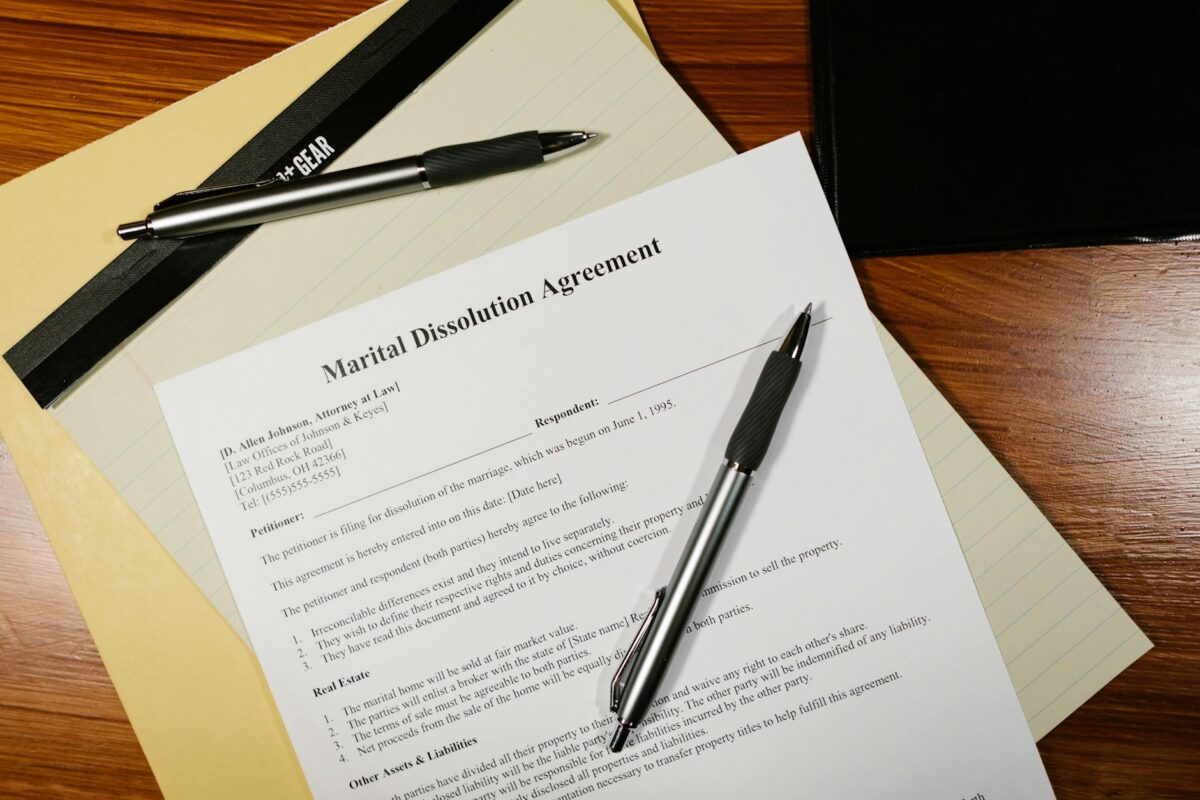
No-fault divorce allows a spouse to end a marriage without proving the other spouse did something wrong. It means you do not need to show adultery, abuse, or abandonment. Every state in the country now permits this option.
Before these laws existed, couples had to air private grievances in open court just to qualify for a divorce. Today, the vast majority of divorces use no-fault grounds. If you are considering ending your marriage, understanding how no-fault divorce works in your state is essential. This guide explains what the term means, how each state handles it differently, and what practical steps you should take next.
How No-Fault Divorce Works
In a no-fault divorce, one or both spouses simply state that the marriage is broken beyond repair. The legal language varies by state. California Family Code § 2310 uses “irreconcilable differences.” New York Domestic Relations Law § 170(7) calls it “irretrievable breakdown.” Texas Family Code § 6.001 uses the unique term “insupportability.” However, the core idea is the same everywhere. No one has to prove wrongdoing.
The spouse who files does not need the other spouse’s agreement in most states. A judge will not ask why the marriage failed. The court’s role is limited to dividing property, determining custody, and resolving support. For example, in California, the court cannot deny a divorce even if one spouse objects. The only requirement is a six-month waiting period under Family Code § 2339.
Some states require a separation period before you can even file. North Carolina General Statute § 50-6 requires one full year of living apart. Virginia requires six months if there are no minor children or twelve months if there are. In most cases, the separation must be continuous. Moving back in together can reset the clock entirely.
No-Fault Divorce Across Different States
Not all no-fault divorce laws work the same way. Approximately 17 states are “pure” no-fault jurisdictions. This means fault-based grounds like adultery or cruelty are not available at all. California, Florida, Oregon, Colorado, and Washington fall into this category. The remaining 33 states offer both fault and no-fault options. Typically, spouses in mixed states choose no-fault because it is faster and less contentious.
The legal terminology and requirements also differ significantly. Below is how several states handle the process.
| State | No-Fault Ground | Statute | Waiting Period | Separation Required? |
|---|---|---|---|---|
| California | Irreconcilable differences | FAM § 2310 | 6 months (mandatory, no exceptions) | No |
| Texas | Insupportability | FAM § 6.001 | 60 days | No |
| New York | Irretrievable breakdown | DRL § 170(7) | None (6-month breakdown statement) | No |
| North Carolina | One year separation | GS § 50-6 | None after filing | Yes — 1 year before filing |
| Florida | Irretrievable breakdown | FL Stat § 61.052 | 20 days | No |
| Maryland | Irreconcilable differences / Mutual consent | FL § 7-103 | None (mutual consent) or 6 months | 6 months if not mutual consent |
| Mississippi | Irreconcilable differences | MS Code § 93-5-2 | 60 days | No — but requires mutual consent |
| Nevada | Incompatibility | NRS § 125.010 | None | No |
As a result, how quickly you can finalize depends heavily on where you live. Nevada, New Jersey, and Georgia have no mandatory post-filing waiting period. California’s six-month wait cannot be waived under any circumstances. Maryland made major changes in 2023, eliminating all fault-based grounds entirely under Family Law § 7-103. New York was the last state to adopt no-fault grounds in 2010.
How No-Fault Divorce Affects Your Case
Filing on no-fault grounds simplifies the legal process significantly. You do not need to gather evidence of misconduct. You do not need witnesses to testify about your spouse’s behavior. This typically saves time and money. It also reduces emotional conflict during an already difficult period.
However, “no-fault” does not mean conduct is completely irrelevant. In many states, courts still consider spousal behavior when dividing property. For example, if one spouse wasted marital assets through gambling or hidden spending, a judge may award a larger share to the other. Judges in some states also weigh fault when determining spousal support. An attorney in your jurisdiction can clarify whether conduct affects financial outcomes.
Child custody is generally decided based on the child’s best interests. In most cases, the reason for the divorce does not change custody outcomes. However, domestic violence or substance abuse can absolutely influence a judge’s decision. These factors are considered separately from the grounds for divorce. A licensed family law attorney can explain how your state handles these specific situations.
Common Misconceptions About No-Fault Divorce
Myth: Both spouses must agree. This is false in almost every state. Only Mississippi and South Dakota require mutual consent for irreconcilable differences grounds. In every other state, one spouse can file without the other’s permission or cooperation. The other spouse may contest terms like custody or property division, but they cannot block the divorce itself.
Myth: Everything gets split equally. Property division rules vary by state. Community property states like California generally split assets 50/50. Equitable distribution states like New York divide assets fairly, which is not always equal. The grounds for divorce do not dictate how property is divided.
Myth: The process is always fast. In reality, waiting periods and separation requirements can extend timelines significantly. California’s six-month period cannot be waived. North Carolina requires a full year of living apart before you can even file. South Carolina’s combination of a one-year separation and post-filing requirements creates one of the longest timelines in the country.
Myth: You do not need a lawyer. While some uncontested cases can be handled without an attorney, legal guidance is important when children, property, or retirement accounts are involved. Even simple cases benefit from a professional review of the final agreement.
⚖️ Get Free Divorce Guides
Free · No spam · Unsubscribe anytime
What to Do Next
Start by learning your state’s specific requirements. Check whether a separation period is required before filing. Find out the mandatory waiting period after you file. Your state court’s official website typically lists this information. The Cornell Legal Information Institute also provides a helpful overview of divorce law terminology.
Consider consulting a licensed family law attorney in your area. An attorney can explain how the laws apply to your specific situation. They can advise on property division, custody arrangements, and support obligations. Many attorneys offer free or low-cost initial consultations. Ask about their experience with both uncontested and contested cases in your county.
Gather your financial documents before meeting with an attorney. This includes recent tax returns, bank statements, retirement account balances, and mortgage documents. Having this information ready helps your attorney assess your case efficiently. Even when filing on no-fault grounds, full financial disclosure is required by the court.
Frequently Asked Questions
Can my spouse stop me from getting a no-fault divorce?
In most states, no. One spouse can file without the other’s agreement. However, Mississippi and South Dakota require mutual consent for irreconcilable differences grounds. If your spouse contests the terms, the process may take longer, but the divorce will typically still be granted.
Does filing on no-fault grounds affect alimony?
It depends on your state. Some states consider marital misconduct when calculating spousal support. Others focus only on financial need and the other spouse’s ability to pay. A family law attorney can explain how your state handles support calculations.
How long does the process take from start to finish?
Timelines vary widely by state. Nevada and Georgia have no mandatory waiting period after filing. California requires a minimum of six months. States with pre-filing separation requirements, like North Carolina’s one-year rule, take even longer. Disputes over property or custody can add additional months.
Is no-fault divorce the same as uncontested divorce?
No. These are different concepts. No-fault divorce refers to the legal grounds for ending the marriage — you do not have to prove wrongdoing. Uncontested divorce means both spouses agree on all terms including property, custody, and support. You can file on no-fault grounds and still have a contested case if you disagree on the terms.
Get Help with Your Divorce
Divorce laws vary dramatically from state to state. A licensed family law attorney in your state can review your situation and explain your rights and options.
Official Sources & Resources
For verified family law information and legal help:
- State Court Self-Help: Search “[your state] court self-help” for free filing guides and forms
- NCSL Family Law: ncsl.org/family-and-human-services
- Child Support Enforcement: acf.hhs.gov/css
- Cornell Legal Information: law.cornell.edu/wex/family_law
- Find Legal Aid: lawhelp.org
Content last reviewed May 2026. This is general educational information, not legal advice. If you notice outdated information, please contact us.