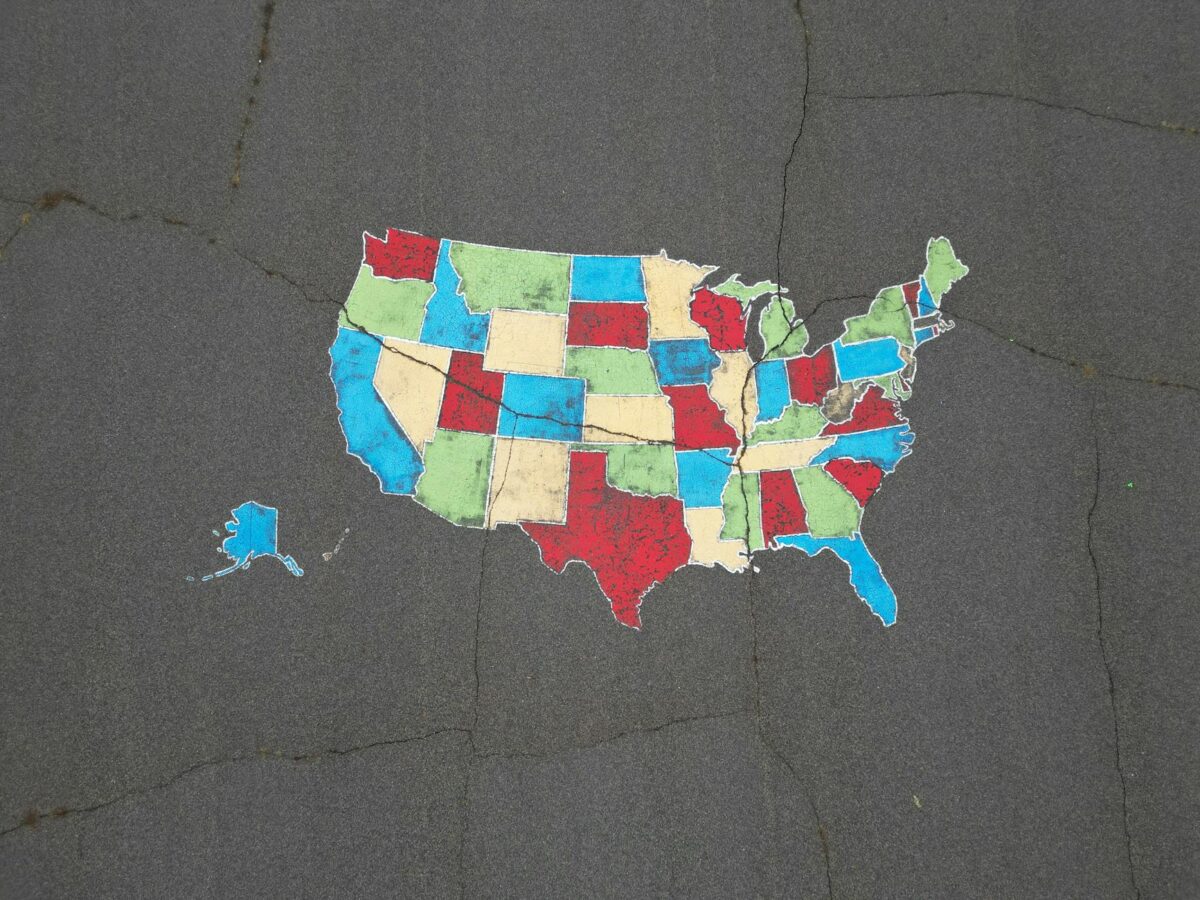
UCCJEA custody jurisdiction determines which state has the authority to make child custody decisions. The Uniform Child Custody Jurisdiction and Enforcement Act (UCCJEA) is a law adopted by 49 out of 50 states. It creates clear rules for custody cases where parents live in different states.
These rules prevent parents from filing competing custody actions in multiple courts. Without the UCCJEA, a parent could seek a favorable ruling by filing in a different state. If your divorce or separation crosses state lines, understanding UCCJEA custody jurisdiction is essential. This guide explains how courts decide jurisdiction, covers state-by-state variations, and outlines steps to protect your parental rights.
How UCCJEA Custody Jurisdiction Works
The UCCJEA establishes four bases for initial custody jurisdiction. Courts apply them in a strict priority order. The “home state” rule comes first and takes precedence over all others. Under Section 201 of the UCCJEA, the home state is the primary basis for UCCJEA custody jurisdiction. A child’s home state is where the child lived with a parent for at least six consecutive months. This period must come immediately before the custody case is filed. For children under six months old, the home state is where the child has lived since birth.
If no state qualifies as the home state, courts look at three backup bases. The second is “significant connection” jurisdiction. A court may hear the case if the child and a parent have meaningful ties to that state. However, this only applies when no home state exists or the home state has declined. The third basis applies when all qualifying courts defer to another state. The fourth is “vacuum” jurisdiction. It applies when no other state has authority. In most cases, the home state rule resolves the question.
The UCCJEA also works alongside federal law. The Parental Kidnapping Prevention Act (28 U.S.C. § 1738A) requires every state to honor valid custody orders. Typically, these two laws align because the UCCJEA was drafted to match the PKPA’s framework. As a result, a valid custody order from one state must be recognized and enforced in all others.
UCCJEA Custody Jurisdiction Across Different States
Forty-nine states, the District of Columbia, and several U.S. territories have adopted the UCCJEA. Massachusetts is the only state that has not. It still uses the older Massachusetts Child Custody Jurisdiction Act (Mass. Gen. Laws ch. 209B). This creates complications for interstate cases involving Massachusetts residents. For example, Massachusetts courts may apply different jurisdictional standards than neighboring states like Connecticut or New York.
Each state codifies the UCCJEA in its own statutes. UCCJEA custody jurisdiction rules are largely consistent, but procedural details can vary. California’s version appears in Family Code Sections 3400 through 3465. Texas codifies it as Family Code Chapter 152. New York includes it in Domestic Relations Law Sections 75 through 76-i. Florida’s provisions appear in Statutes Sections 61.501 through 61.542. Illinois adopted the UCCJEA at 750 ILCS 36/101. The table below compares how several states handle key aspects.
| State | Statute Citation | UCCJEA Adopted | Notable Details |
|---|---|---|---|
| California | Fam. Code §§ 3400–3465 | Yes | 2023 amendment added emergency jurisdiction provisions |
| Texas | Fam. Code Ch. 152 | Yes | Explicitly states physical presence is not sufficient for jurisdiction |
| New York | DRL §§ 75–76-i | Yes | Home state defined in DRL § 75-a(7) |
| Florida | §§ 61.501–61.542 | Yes | Purposes include deterring parental abduction |
| Illinois | 750 ILCS 36/101 et seq. | Yes | Standard UCCJEA implementation |
| Ohio | Rev. Code Ch. 3127 | Yes | Adopted in 2005 |
| Massachusetts | Gen. Laws ch. 209B | No (uses older UCCJA) | Senate passed UCCJEA bill in 2024 and 2025; House has not acted |
| Washington | RCW 26.27 | Yes | Standard UCCJEA implementation |
How UCCJEA Custody Jurisdiction Affects Your Divorce
UCCJEA custody jurisdiction directly impacts where your custody case will be heard. The state where your case is decided affects travel costs, attorney options, and convenience. If you recently moved, you may not be able to file in your new state right away. The six-month residency requirement means your former state likely retains home state status. Filing in the wrong state can result in your case being dismissed.
Once a state makes a custody determination, it keeps exclusive continuing jurisdiction. This rule comes from Section 202 of the UCCJEA. The original state controls the case as long as a parent or child still lives there. Another state cannot modify the order until the original state gives up jurisdiction. This also prevents “forum shopping.” A parent cannot file in a more favorable state to get a different result.
For military families, these rules carry extra weight. A Permanent Change of Station order can relocate a family involuntarily. However, courts recognize that military moves are not voluntary relocations. Temporary deployments count toward the six-month period if the child stays in the state. If you are a service member facing a custody dispute, consult an attorney who understands both military law and the UCCJEA.
Common Misconceptions About UCCJEA Custody Jurisdiction
Myth: You can file for custody in any state where the child is present. UCCJEA custody jurisdiction is not based on where the child happens to be. Physical presence alone is neither necessary nor sufficient for jurisdiction. The home state rule requires six months of continuous residence. A parent who takes a child to a new state cannot file there immediately.
Myth: Courts pick the state that is best for the child. The UCCJEA deliberately removed best-interest analysis from jurisdiction decisions. Best interests matter only after a court establishes proper jurisdiction. Jurisdiction is determined by the statutory rules, not by which state seems better. This was a key change from the older UCCJA.
Myth: Moving to a new state immediately gives that state jurisdiction. It does not. The former state retains home state status for six months after the child leaves. If a custody order already exists, the original state keeps exclusive continuing jurisdiction. UCCJEA custody jurisdiction rules specifically prevent gaining an advantage through relocation. Section 208 requires courts to decline jurisdiction obtained through wrongful removal of a child.
Myth: Massachusetts follows the same rules as every other state. It does not. Massachusetts has not adopted the UCCJEA. It still uses the older MCCJA framework under Mass. Gen. Laws ch. 209B. Typically, other states will apply their own UCCJEA provisions in interstate cases. However, enforcement and cooperation between courts can be more difficult when Massachusetts is involved.
⚖️ Get Free Divorce Guides
Free · No spam · Unsubscribe anytime
What to Do Next
If your custody case involves more than one state, consult a family law attorney. UCCJEA custody jurisdiction questions require careful legal analysis. An experienced attorney can determine which state qualifies as the home state. Do not assume that filing first gives you an advantage. The rules are based on the child’s connections, not which parent acts fastest. A licensed attorney in your state can evaluate your specific situation.
Before meeting with an attorney, gather key information. Document where the child has lived for the past six months. Note the dates of any moves or temporary absences. Collect records that show the child’s ties to each state. For example, school enrollment records, medical files, and community activities all help establish significant connections.
Ask your attorney these specific questions. Which state is the home state under the UCCJEA? Has any other state already asserted jurisdiction? Could the other parent challenge jurisdiction in another forum? Is there an emergency that allows temporary jurisdiction? Getting clear answers early can prevent costly legal battles over where your case belongs.
Frequently Asked Questions About UCCJEA Custody Jurisdiction
What happens if two states both claim custody jurisdiction?
The UCCJEA requires courts in both states to communicate and resolve the conflict. The home state has priority under Section 201. The federal PKPA also requires the second state to defer to the state with proper jurisdiction.
Can I file for emergency custody in a state that is not the home state?
Yes, under Section 204 of the UCCJEA. A court has temporary emergency jurisdiction if the child is present and faces abuse or abandonment. However, emergency orders are temporary and must include a deadline to seek a permanent order from the home state.
Does the UCCJEA apply to international custody disputes?
Yes. Section 105 treats foreign countries as states for jurisdictional purposes. Courts must recognize foreign custody orders made under standards similar to the UCCJEA. However, recognition can be refused if the foreign country’s law violates fundamental human rights principles.
How long does a state keep jurisdiction after everyone moves away?
Under Section 202, a state keeps exclusive continuing jurisdiction until all parties leave. Once the child, both parents, and any person acting as a parent have moved away, the state loses jurisdiction. A new home state can then take over the case.
Get Help with Your Divorce
Divorce laws vary dramatically from state to state. A licensed family law attorney in your state can review your situation and explain your rights and options.
Official Sources & Resources
For verified family law information and legal help:
- State Court Self-Help: Search “[your state] court self-help” for free filing guides and forms
- NCSL Family Law: ncsl.org/family-and-human-services
- Child Support Enforcement: acf.hhs.gov/css
- Cornell Legal Information: law.cornell.edu/wex/family_law
- Find Legal Aid: lawhelp.org
Content last reviewed May 2026. This is general educational information, not legal advice. If you notice outdated information, please contact us.